Case study
SmartKYC
Reusable verified identity: the customer owns the file, institutions get explicit, limited and revocable access.
01
Context
In the CEMAC zone, customers re-submit the same identity documents to every bank, microfinance institution or operator they deal with. SmartKYC is an internal Think Dev product built around that friction.
02
Problem
Make a verified identity file reusable without turning it into a data leak: the customer must stay in control of who sees what, for how long, and every access must be accountable.
03
What I did
Product, architecture and development at Think Dev, in a monorepo shared by the web app, the mobile app and the API.
04
Key technical decisions
The customer owns the file
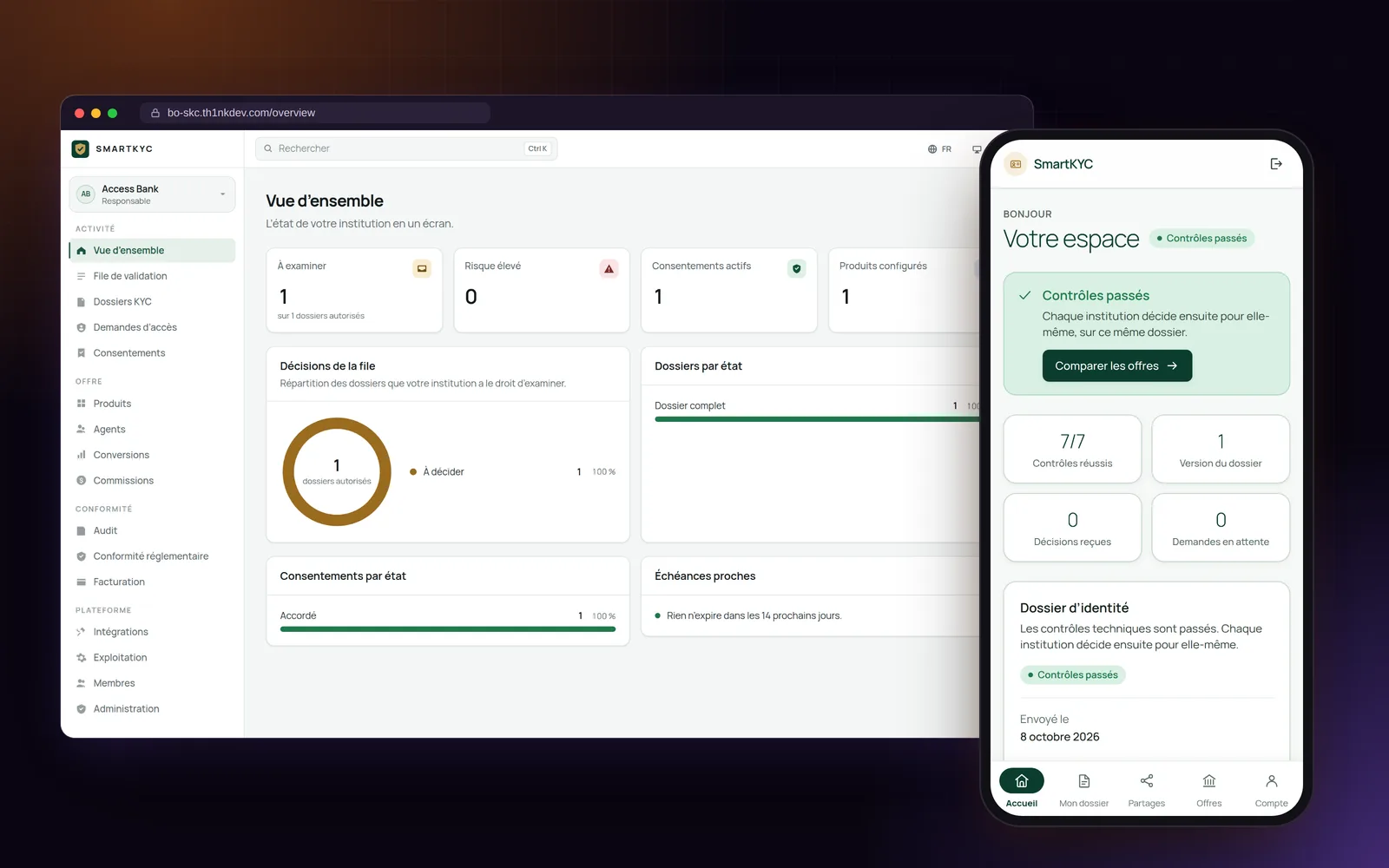
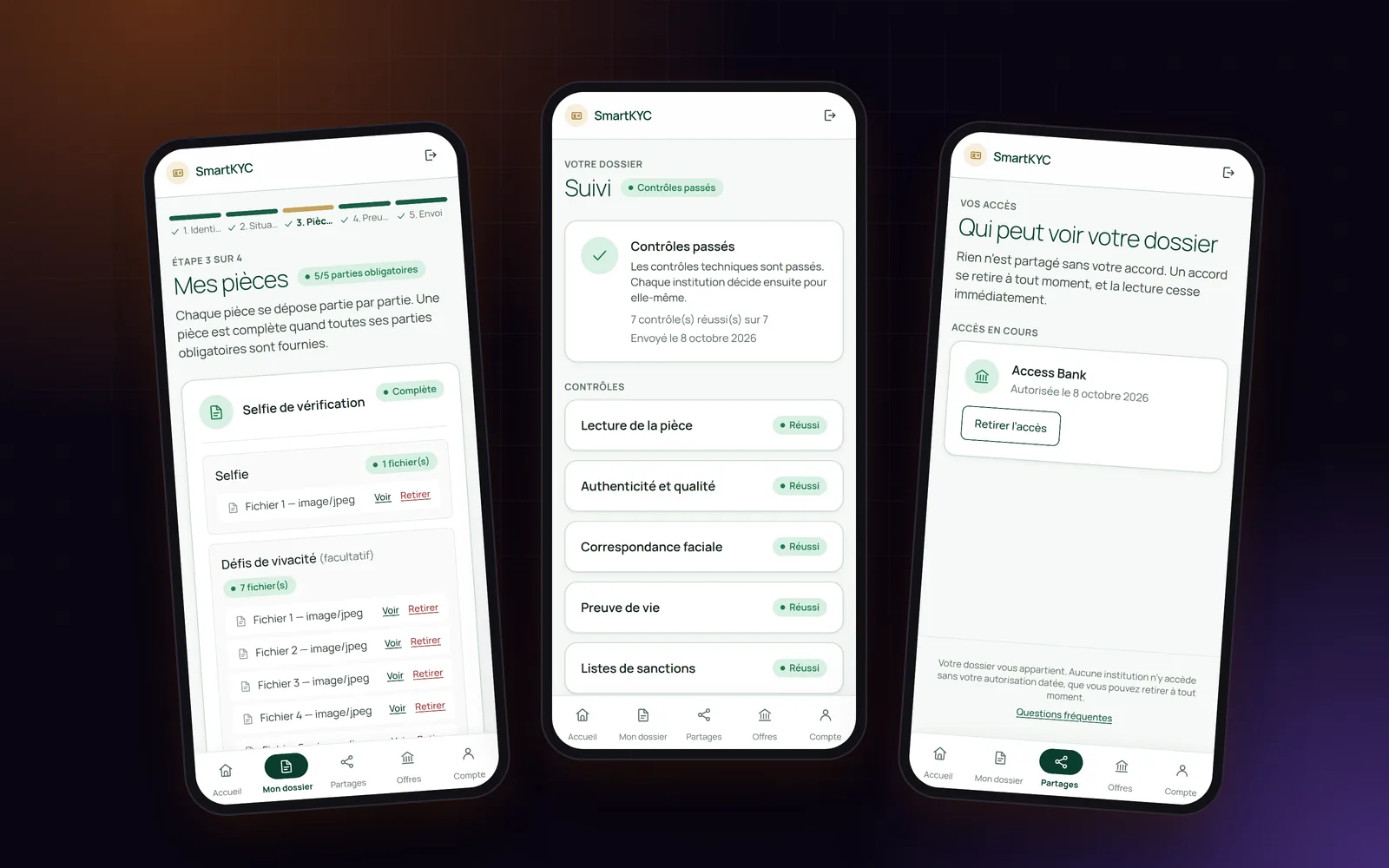
Each institution is granted explicit, scoped and revocable access by the customer. Revoking access is a first-class action, not a support ticket.
Multi-tenant isolation
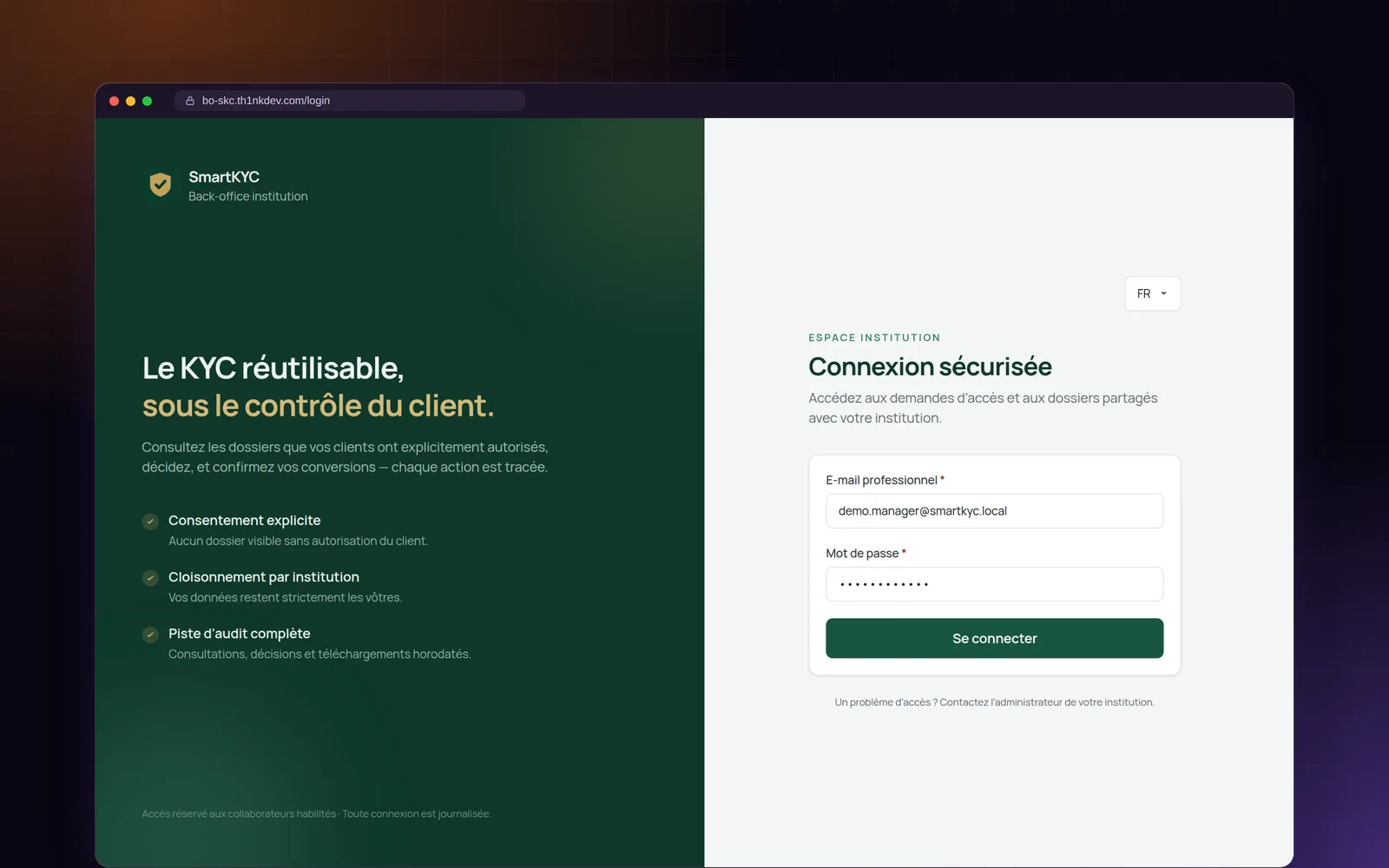
Institutions are isolated tenants: one partner can never read another partner’s data.
Audit trail on every access
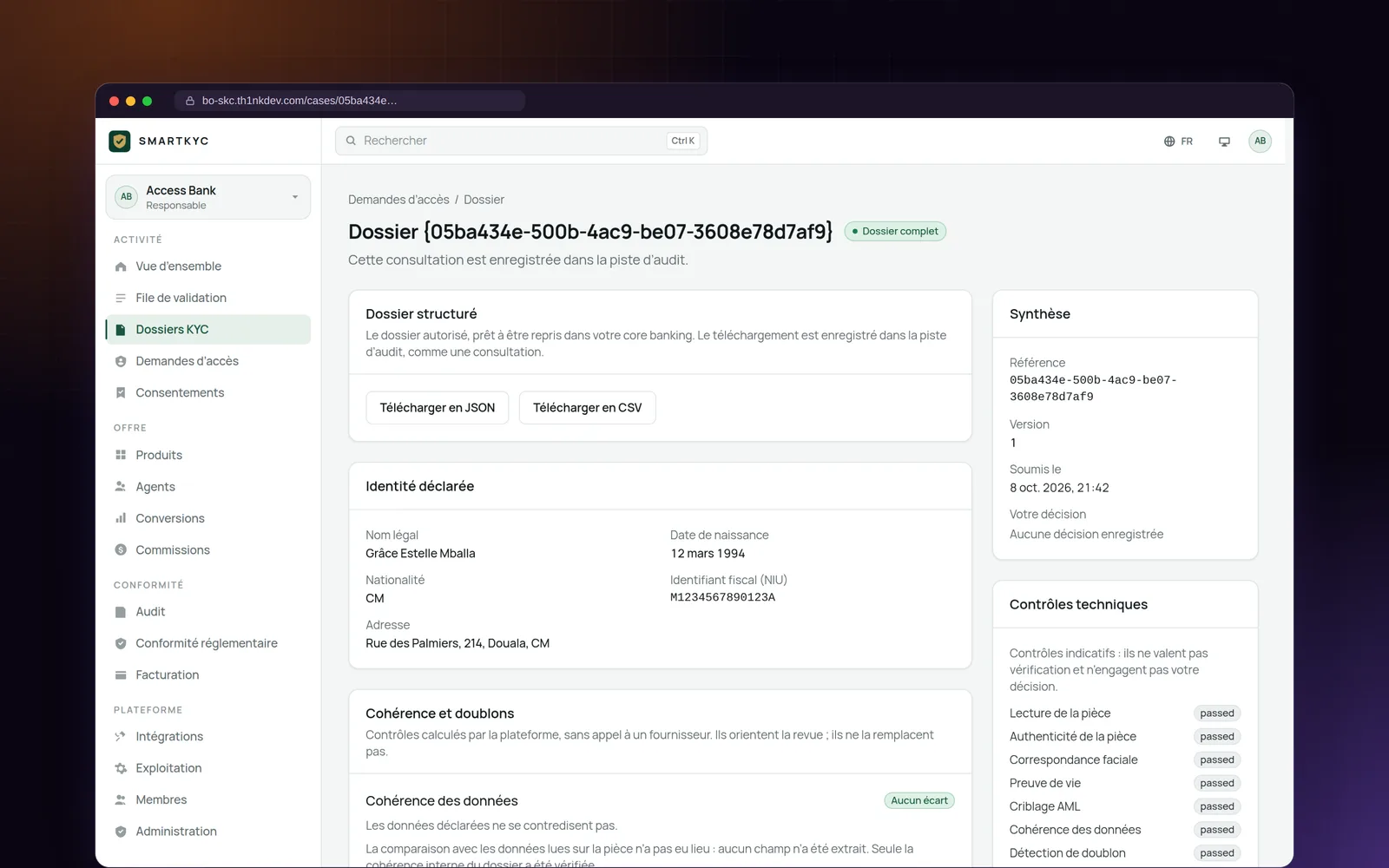
Every read of an identity file is recorded with who, when and under which grant.
Signed partner API and webhooks
Partners integrate through a signed API and receive webhooks, so requests can be authenticated and events trusted.
Mobile capture
A mobile flow with camera capture collects documents where customers actually are: on their phone.
05
Result
In development since January 2026.
06
Stack
- Nuxt 4
- Expo
- PostgreSQL
- Redis
- AdonisJS
- Monorepo
07
Screens