Case study
Hathor DS
Supervising a fleet of anti-ransomware backup appliances that are offline by design.
01
Context
Groupe ISIS is a French IT group working on sovereign storage, cybersecurity and managed IT services. Its anti-ransomware offering relies on backup appliances that disconnect from the network in cycles, so that ransomware spreading through an information system cannot reach the backups.
02
Problem
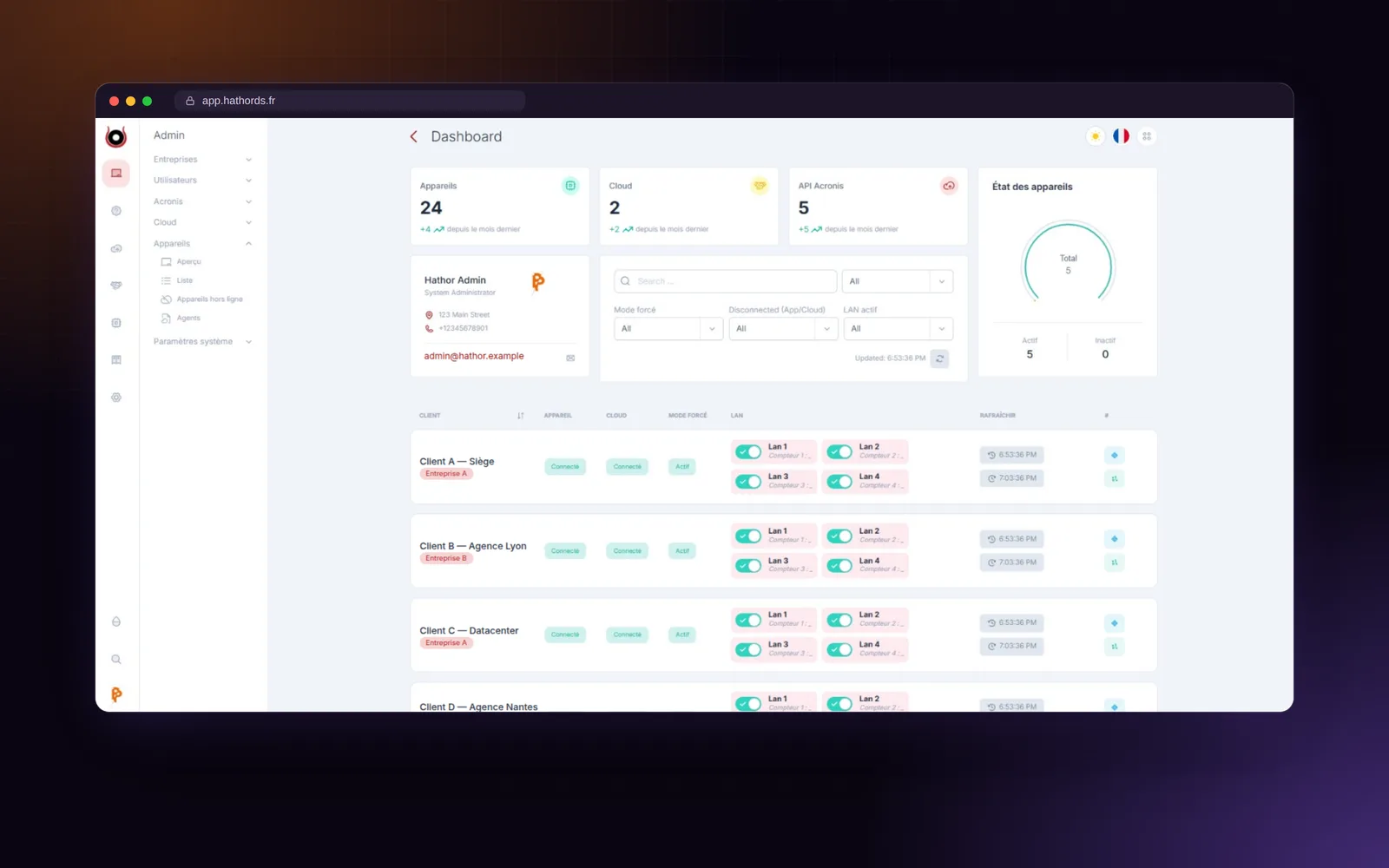
Supervising that fleet means working with machines that are unreachable by design part of the time. The interface cannot assume a live connection: state arrives late, and a silent appliance may be perfectly normal — or the first sign of an incident.
03
What I did
I owned the product solo, end to end: the API and the interface, from the data model to deployment, as a technical service provider for the group from March 2025 to September 2026.
04
Key technical decisions
Deferred synchronisation
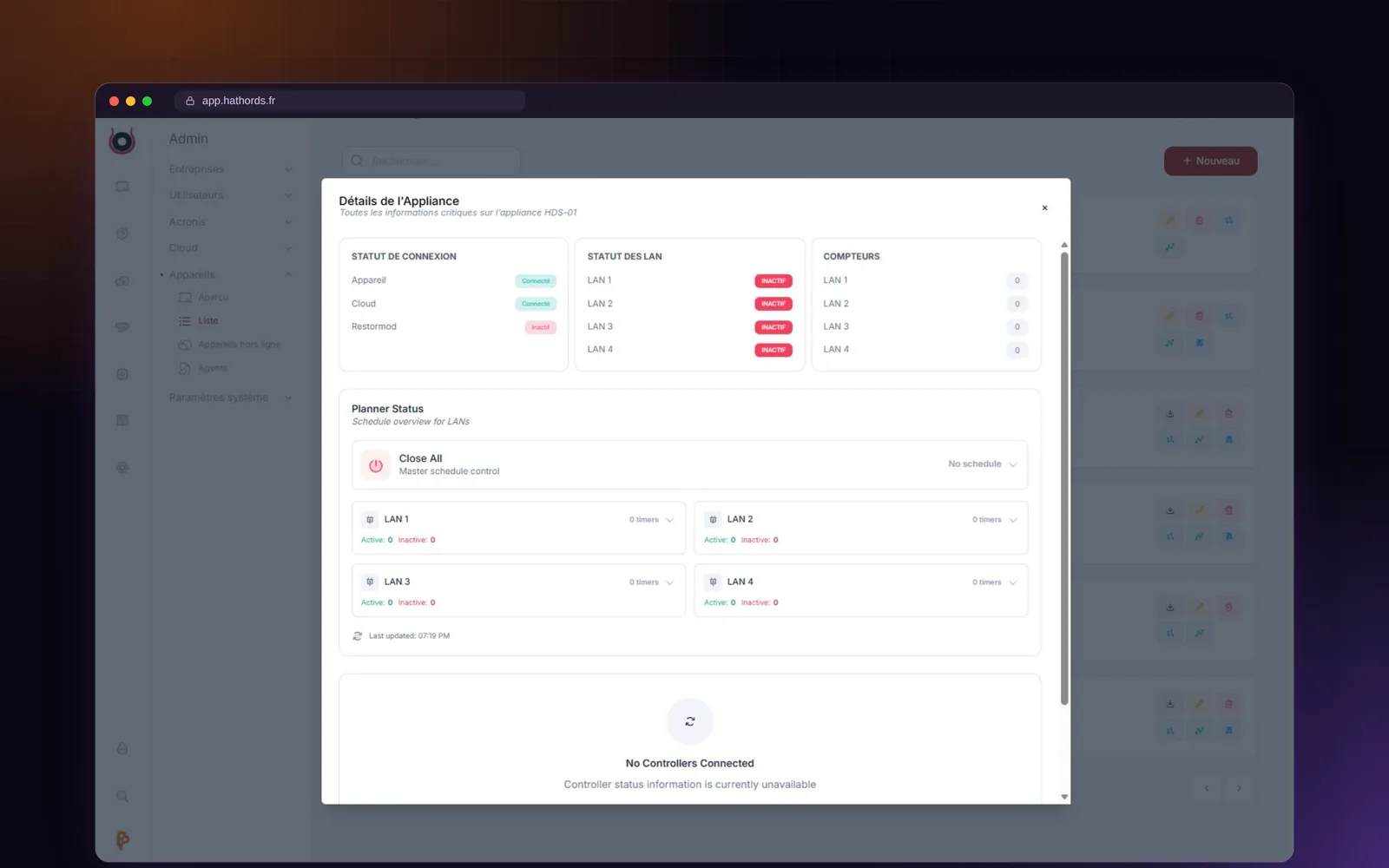
Appliances report when their connection window opens. The server treats each report as a dated snapshot rather than as live state, and the UI says how old every piece of information is.
Reconciliation on reconnection
When an appliance comes back, what it reports is reconciled with what the server expected, so that history stays consistent even after long disconnections.
Missed-cycle alerts
Silence is only an alert when it breaks the expected cycle. Alerts compare the planned schedule with what was actually observed.
Automation webhooks
Events are exposed through webhooks so the client’s own tooling can react without polling the interface.
05
Result
In service for Groupe ISIS throughout the engagement (March 2025 – September 2026).
06
Stack
- Vue 3
- TypeScript
- Laravel
- MySQL
- Docker
- SSH
- Nginx
07
Screens