Case study
ShiftRitual
Fully mobile scheduling and management app, with its showcase website.
- Client
- Think Dev
- Years
- 2026 – present
- Domain
- SaaS
01
Context
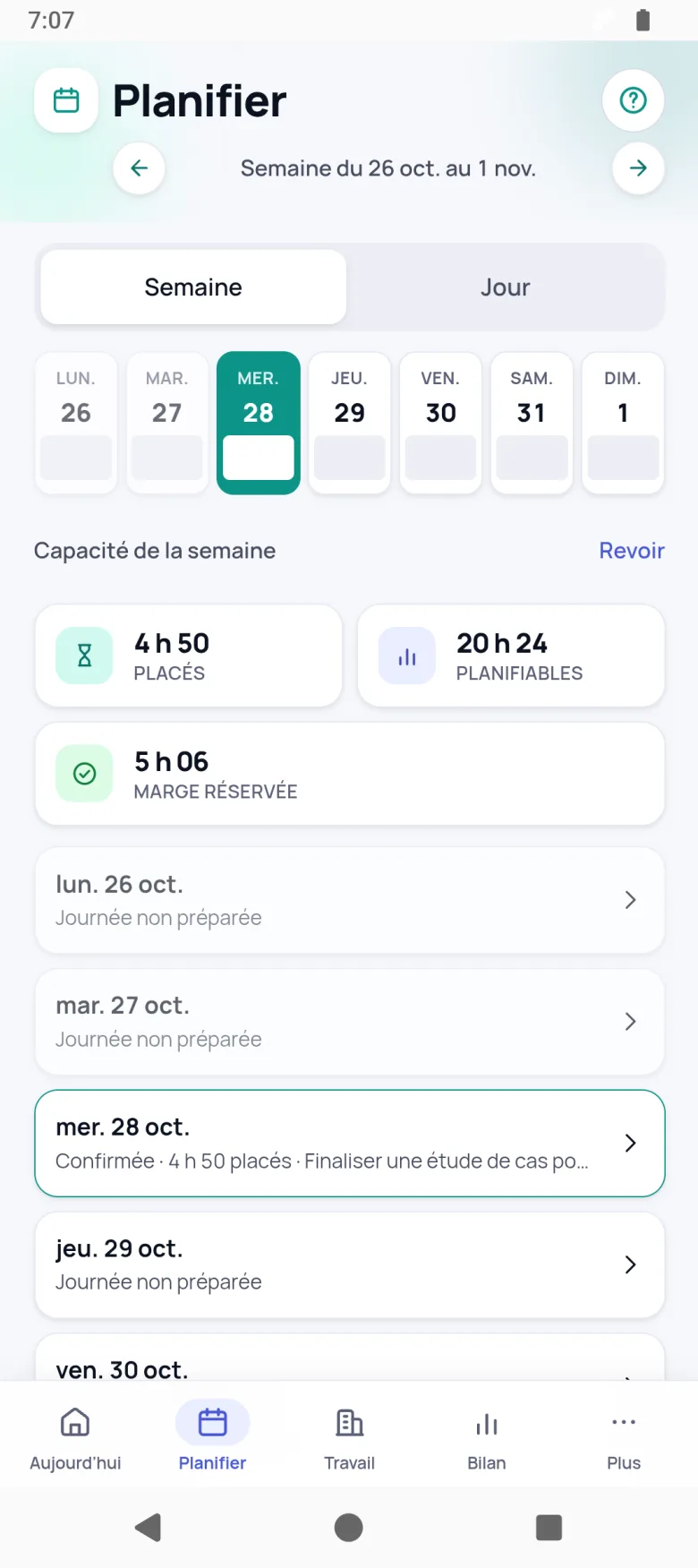
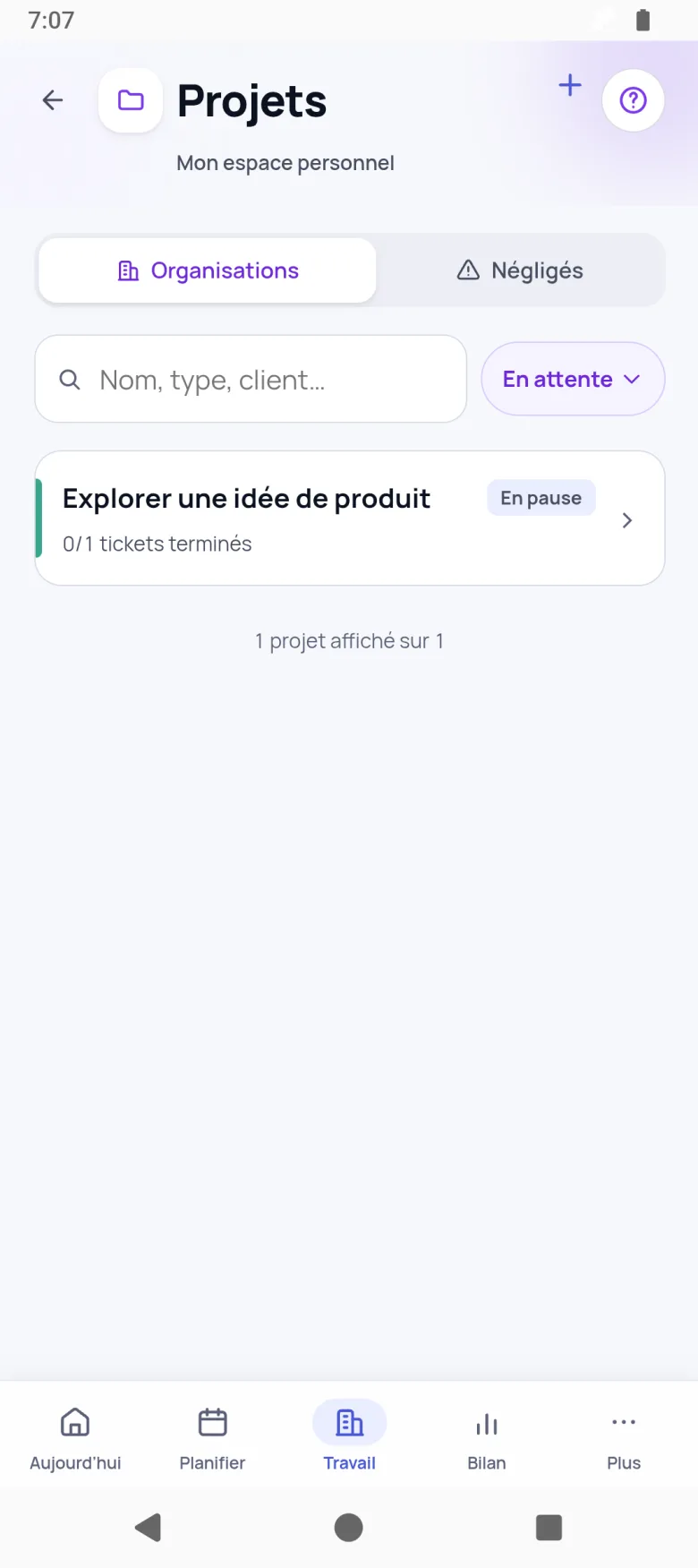
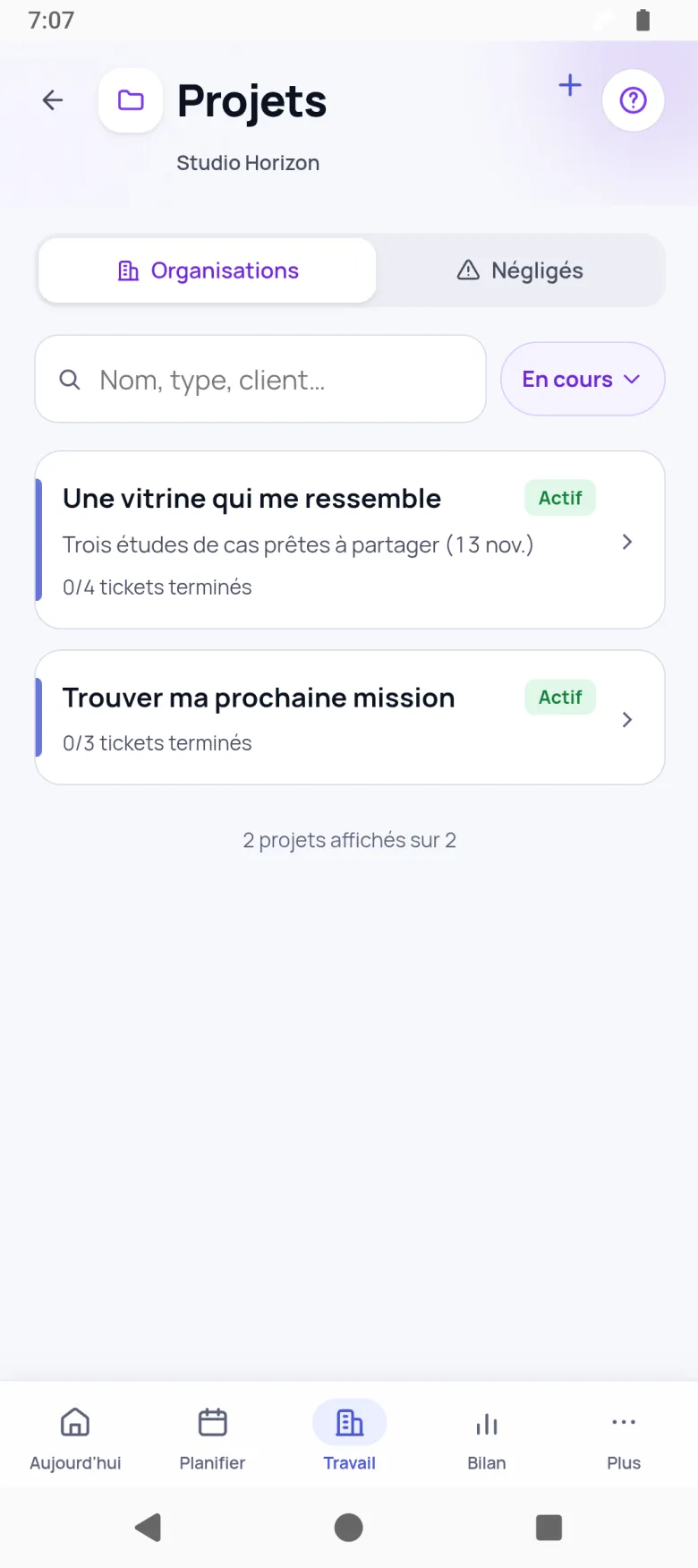
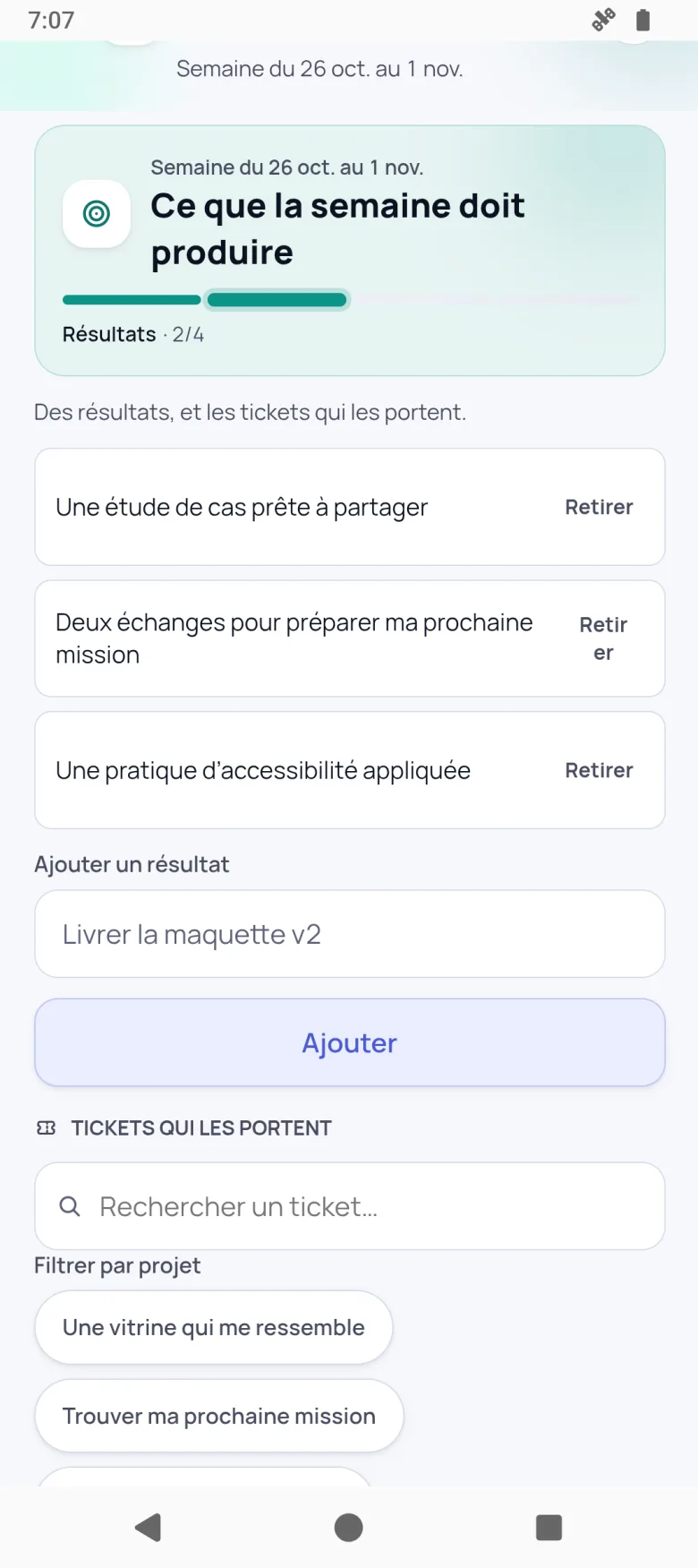
ShiftRitual is a mobile app for people dividing their time across several projects. It connects capturing an idea, preparing the week, planning the day and running focus sessions, through to the daily review.
02
Problem
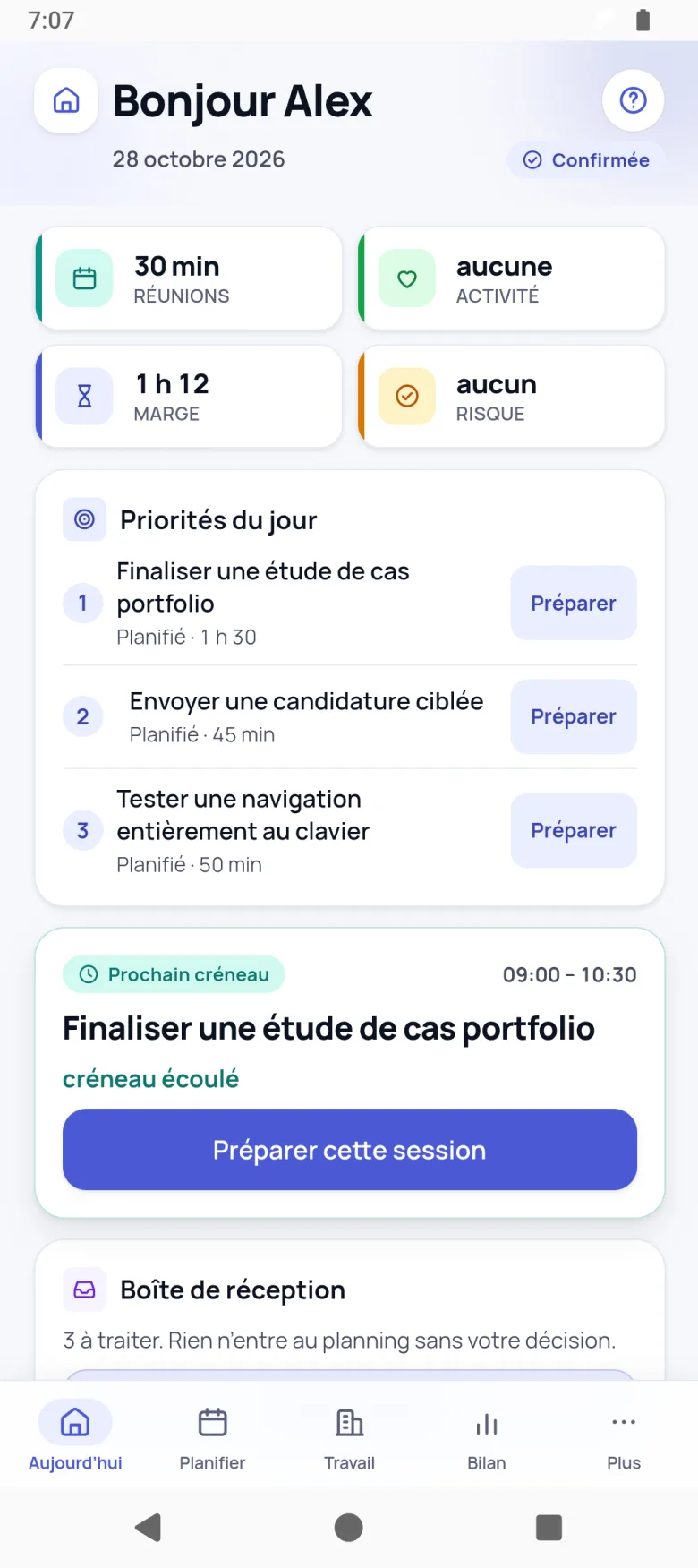
A task list does not explain what will actually fit into a day. The product needed to align commitments with availability, then make interruptions and postponements understandable without quietly rearranging the user’s schedule.
03
What I did
I designed and developed the product flow, the Nuxt/Capacitor mobile interface and the Nitro API, with shared business rules and contracts in a monorepo. The work also covers local persistence, synchronisation and recovery states, so the interface can explain deviations from the plan.
04
Key technical decisions
Capture before making a commitment
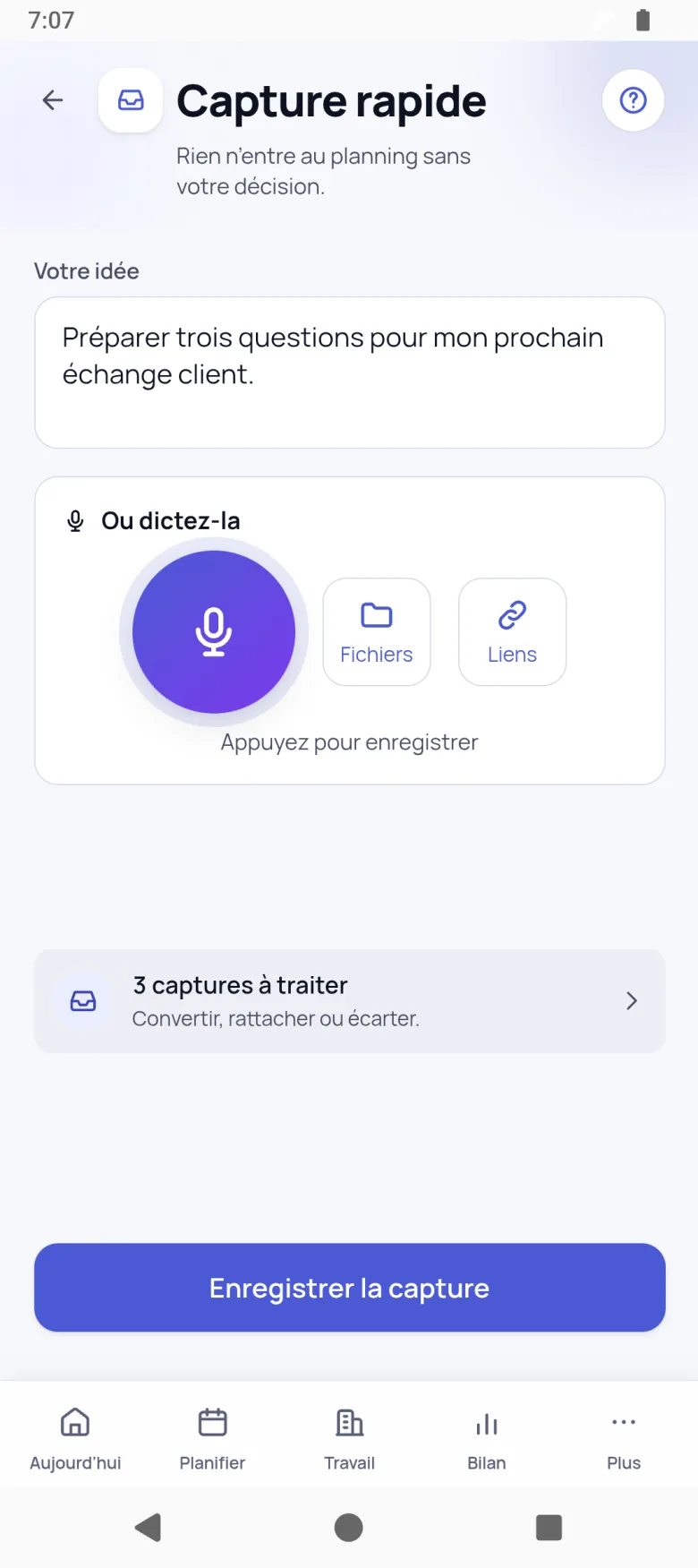
An idea first enters a local inbox. Turning it into a ticket and allocating a time slot remain separate decisions: recording something does not automatically reserve time for it.
Start with the time actually available
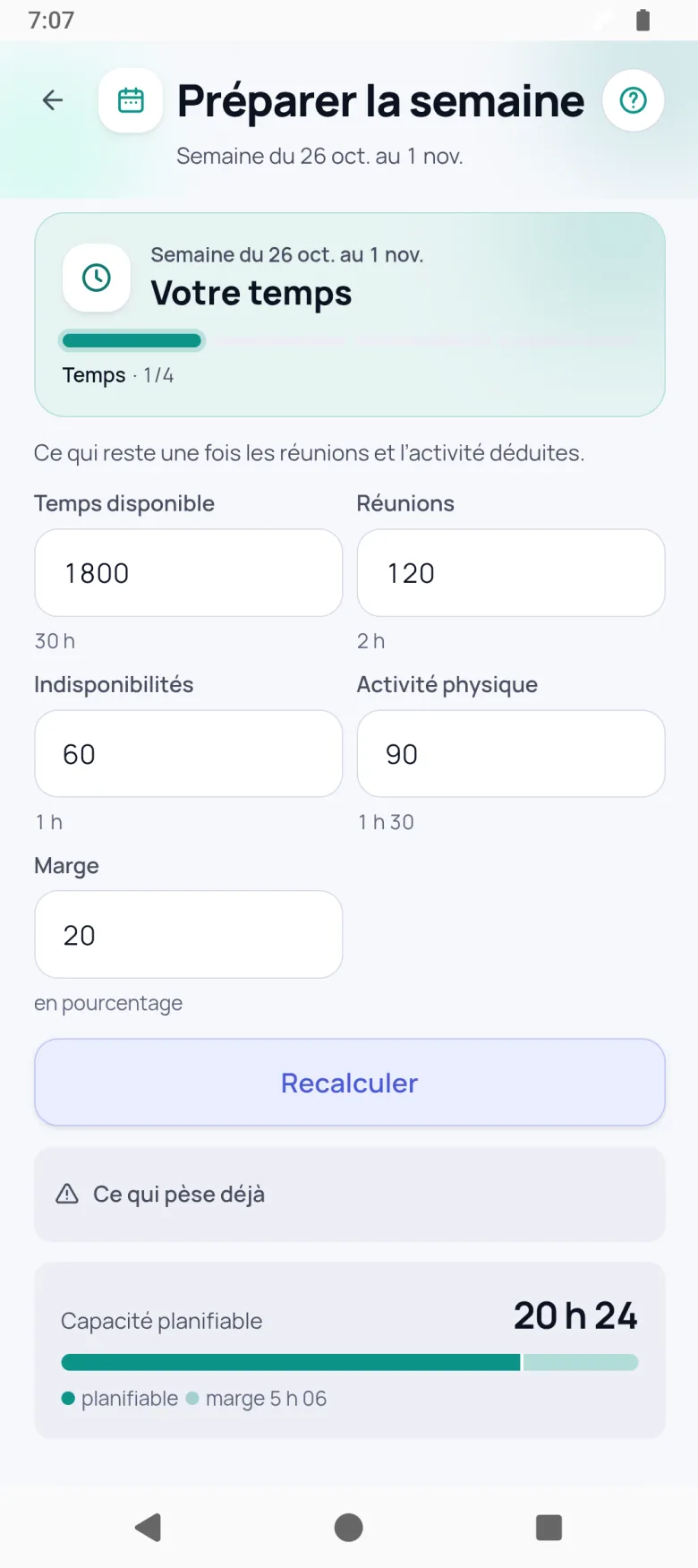
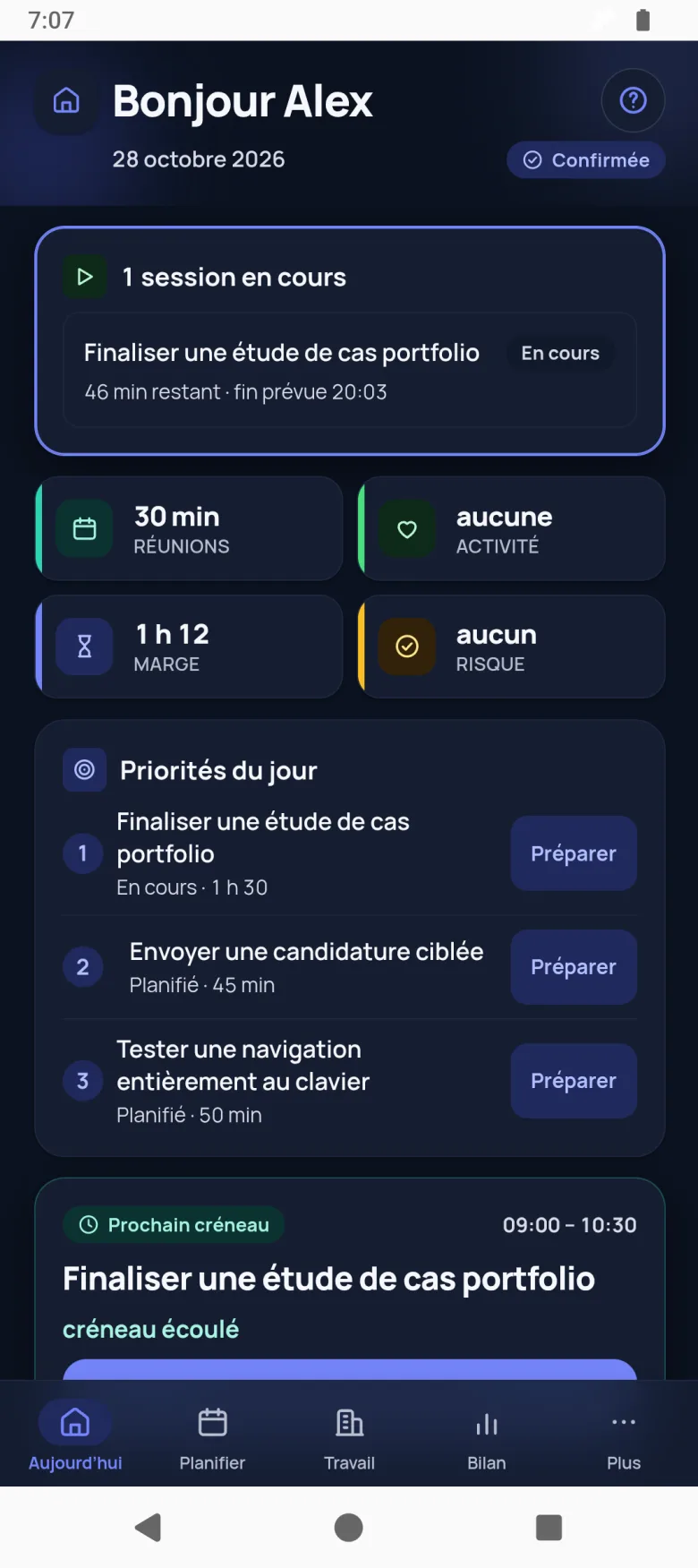
Capacity calculations deduct meetings, breaks, unavailability and a buffer before comparing planned work with usable time. Overload is flagged; it never silently changes the schedule.
Reconstruct sessions from events
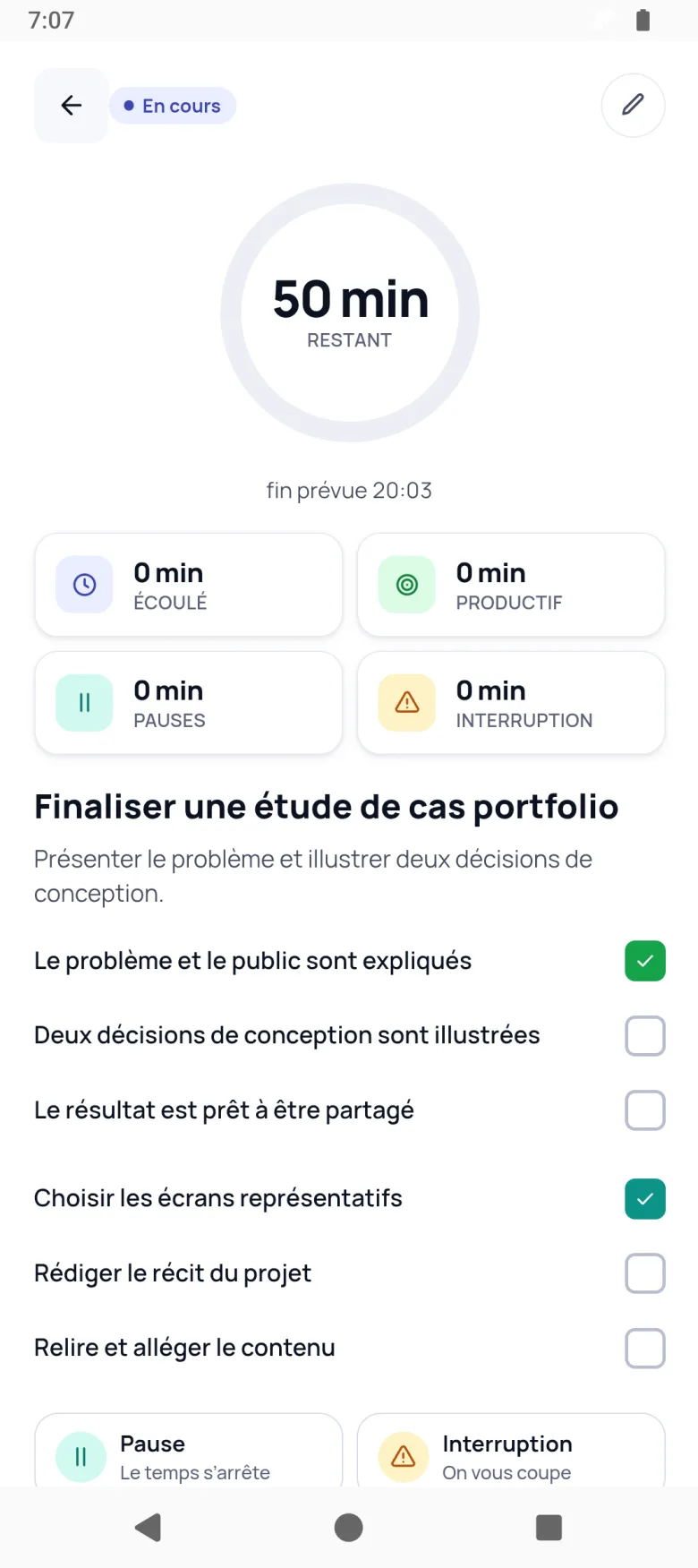
The timer uses timestamps for starts, pauses, interruptions and resumptions. When the app returns to the foreground, productive time is recalculated instead of relying on a counter remaining active in the background.
Write locally and expose conflicts
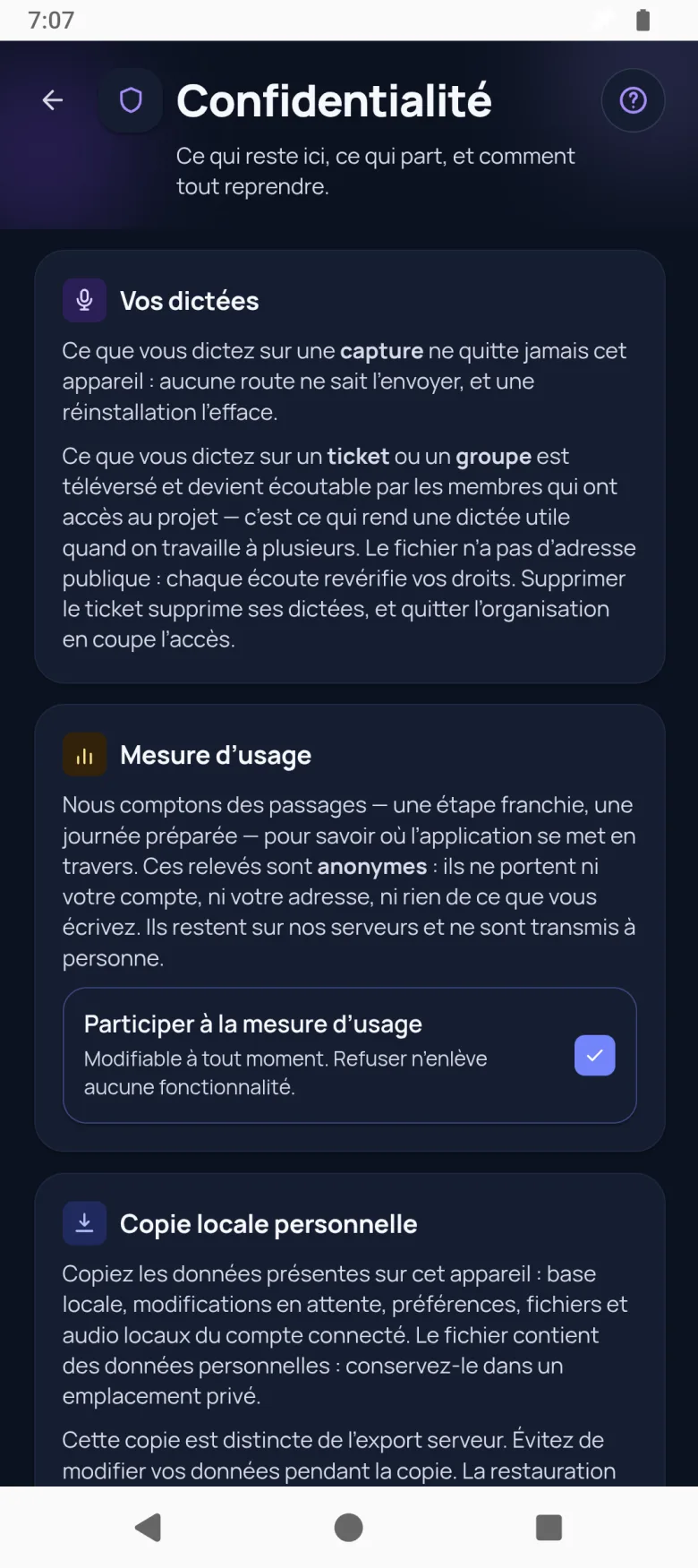
Day-to-day data is saved in a local database scoped to the account. A mutation journal then feeds synchronisation; conflicts and rejected changes remain explicit instead of silently overwriting data.
Share rules and separate interfaces
The domain and validation schemas sit outside the screens and are reused by the API. Weekly and daily planning therefore use the same capacity calculation, backed by tests for the rules and their edge cases.
05
Result
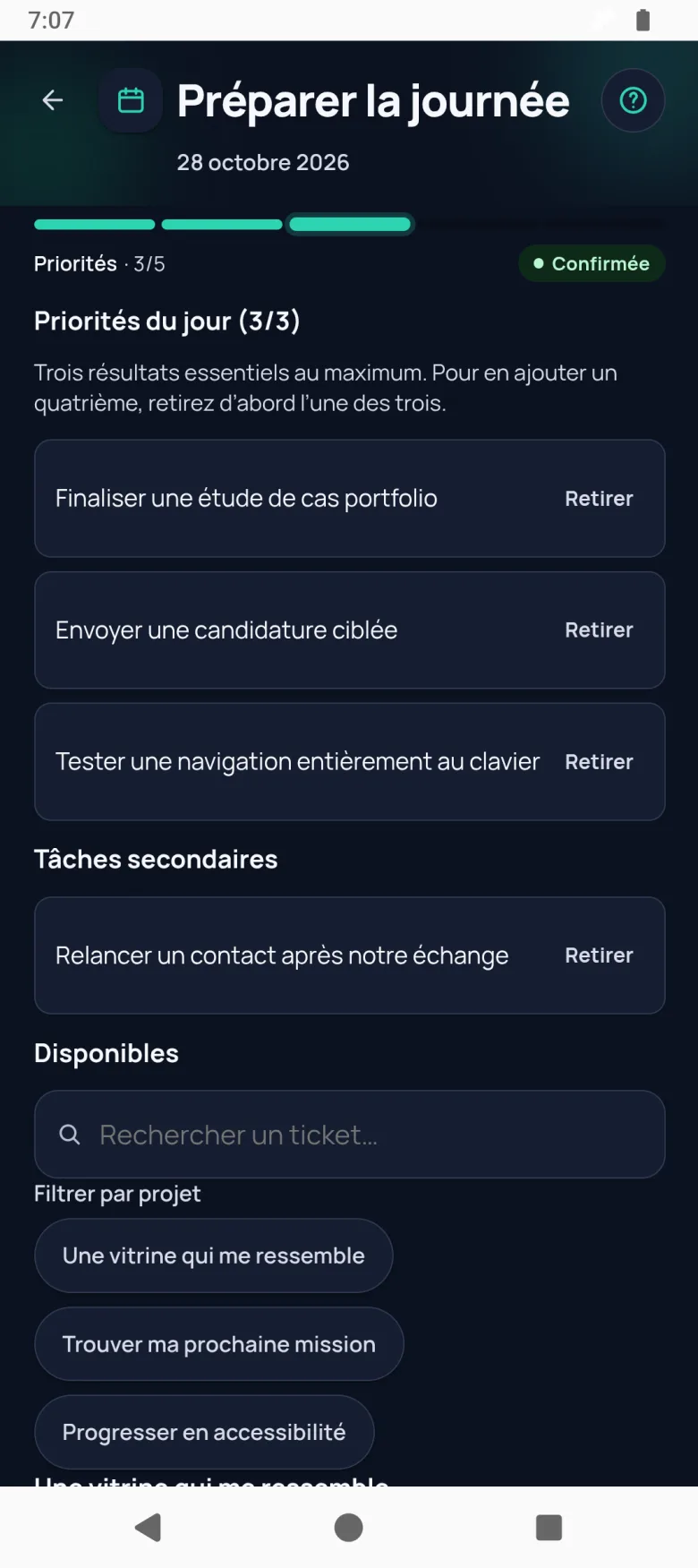
The implemented flow covers capture, weekly preparation, daily planning, execution and review. Session screens distinguish pauses, interruptions and blockers, then let the user decide what happens next. These steps live in one product, with a record of deviations and recovery decisions.
06
Stack
- Nuxt 4
- Vue 3
- TypeScript
- Capacitor
- Pinia
- Nitro
- PostgreSQL
- sql.js
- IndexedDB
07