Case study
Ordyma
Management platform for restaurants, bars, cellars and hotels: QR ordering, floor plan, real-time orders, staff and recipes. In pilot.
- Client
- Think Dev
- Years
- 2026 – present
- Domain
- SaaS
01
Context
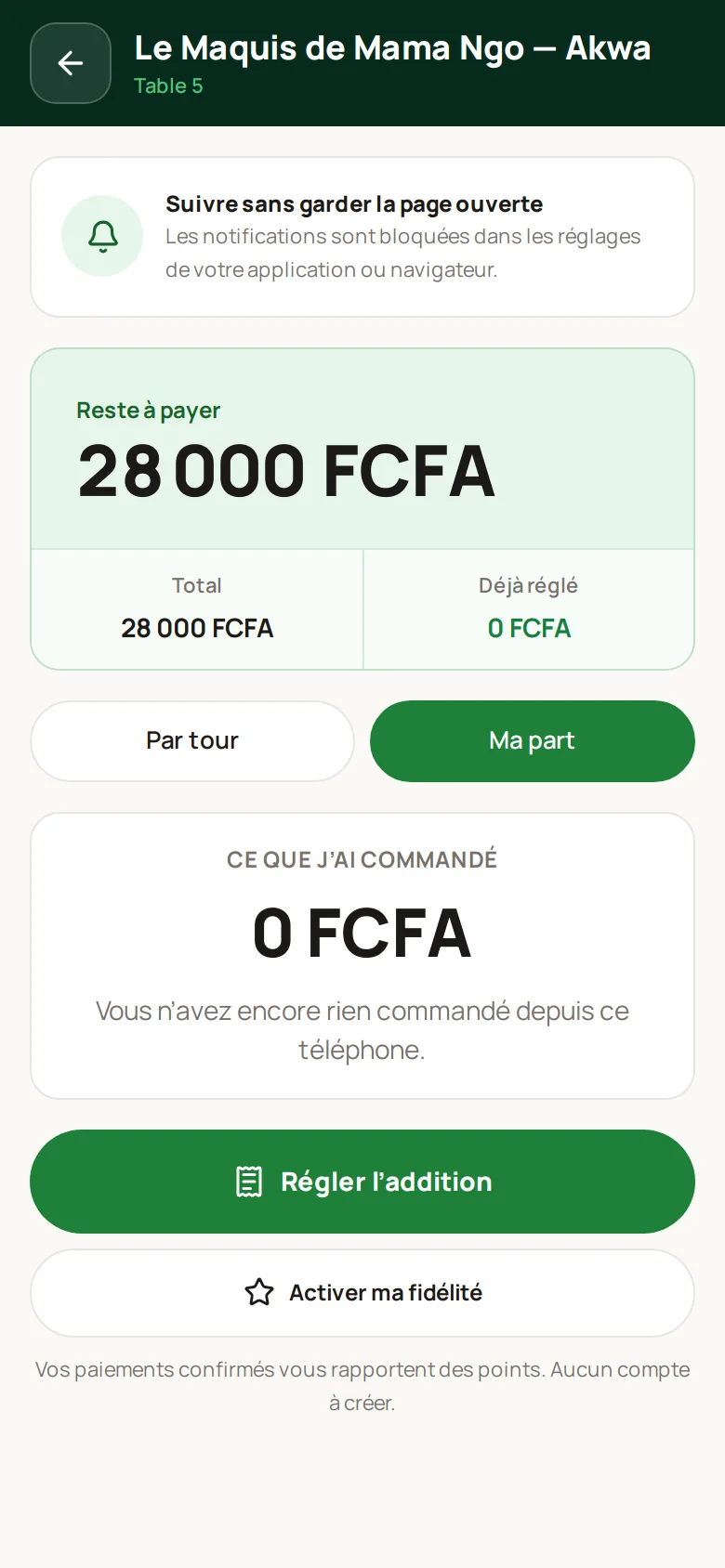
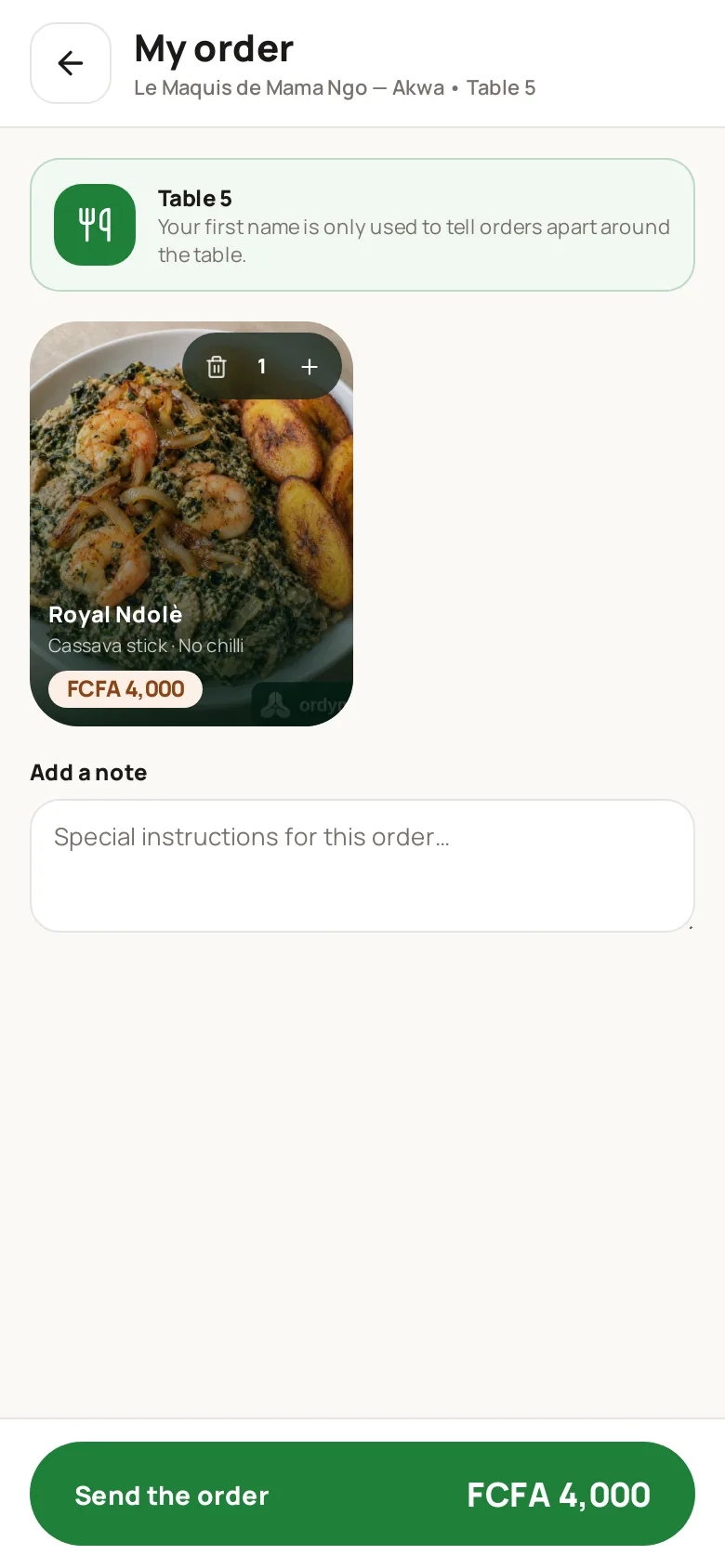
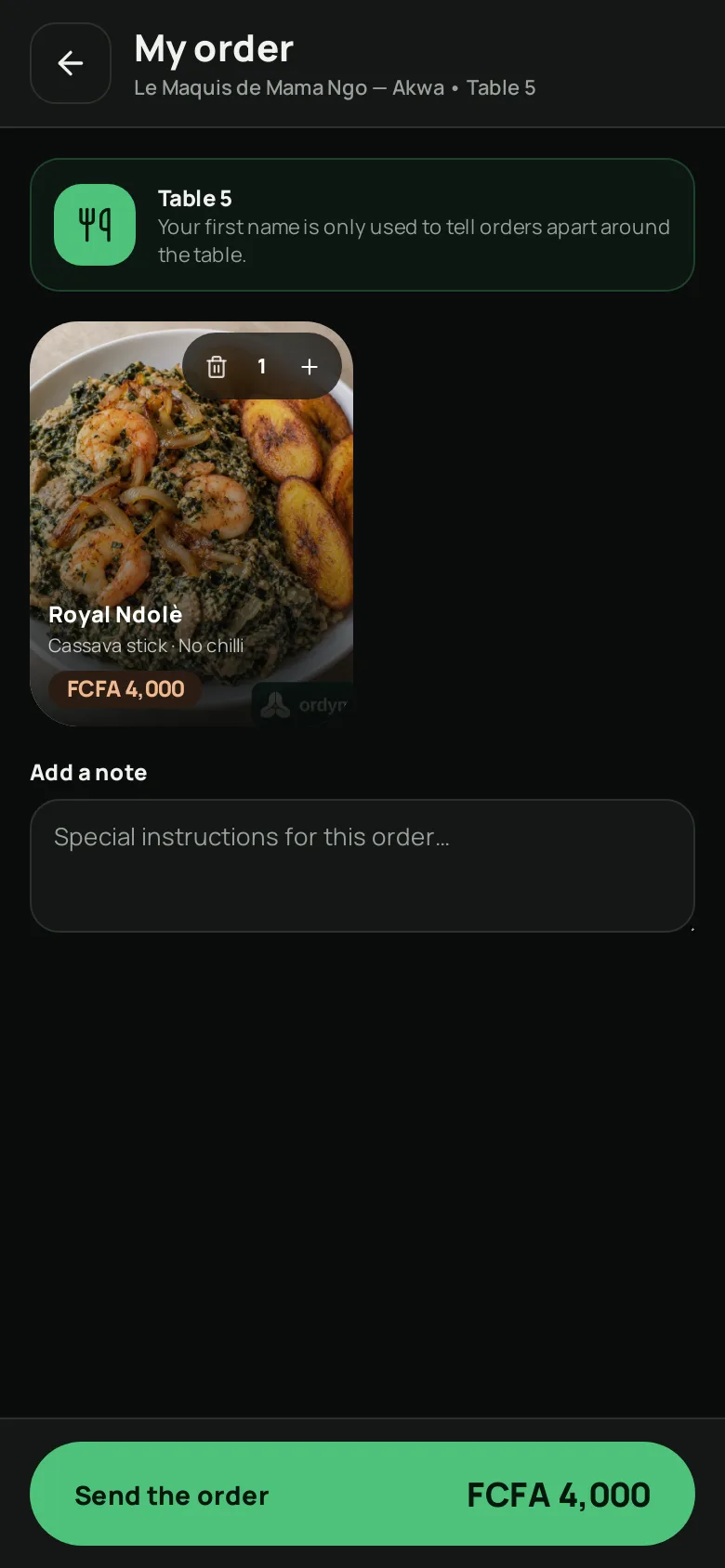
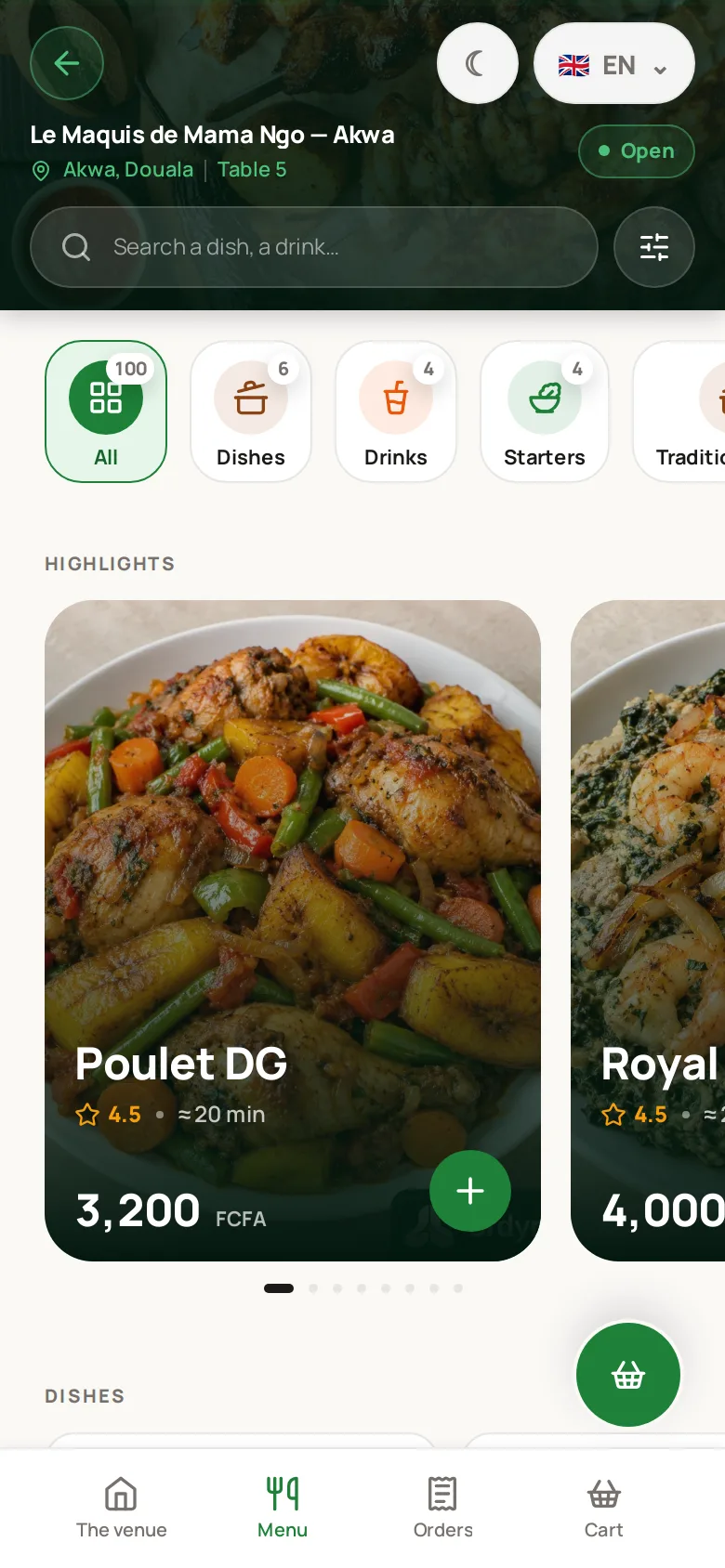
Ordyma is a Think Dev product designed for restaurants, bars and hotels, with Cameroon as its first intended market. It connects guests ordering from a QR code with floor staff, preparation and checkout, without forcing every role into the same interface.
02
Problem
A table may place several rounds of orders, call a waiter and split its bill. Meanwhile, the kitchen needs its own ticket flow and managers need a consistent view of each establishment. Intermittent connectivity and service continuing past midnight add another constraint: a retried order or a sale assigned to the wrong day can distort the whole record.
03
What I did
Product design, architecture and development within Think Dev: guest journeys, the staff application, the API and the shared business layer. The work covers both everyday service actions — opening a table, submitting an order, tracking preparation and taking payment — and the rules that keep those actions consistent across roles and establishments.
04
Key technical decisions
Two interfaces for two different jobs
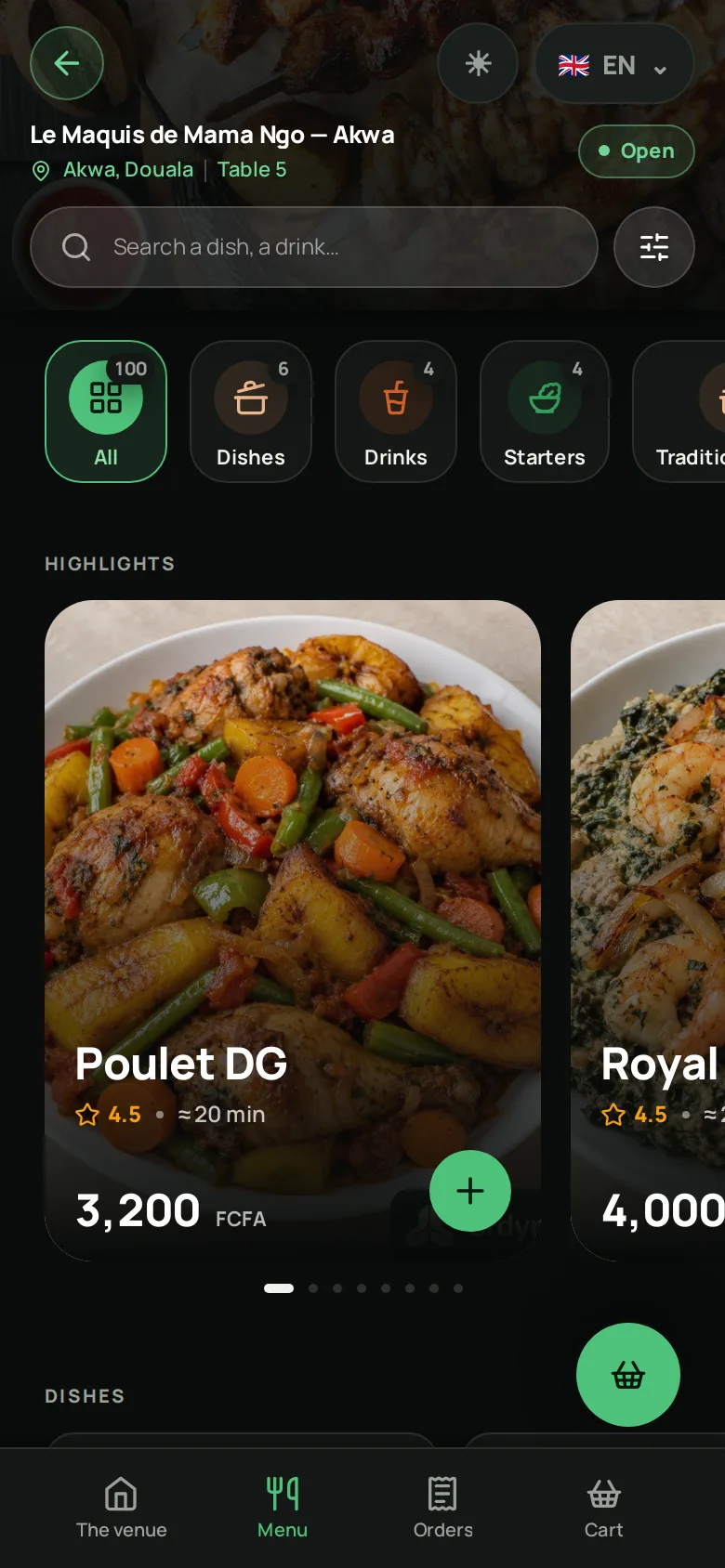
The guest journey uses server-rendered Nuxt and remains accessible in a browser after scanning a QR code. Staff use a Vue application packaged for Android with Capacitor. The interfaces share types, components and business rules while keeping separate navigation and operational constraints.
Separate permissions from establishment scope
Permissions live in a shared TypeScript core. A role defines what someone can do; scope defines the establishments they can access. The API and interfaces use the same rules rather than maintaining separate permission matrices.
Reconnecting must not create another order
Mutations carry an idempotency key: retrying the same key and payload retrieves the stored response. Changes are committed to an event log before SSE delivery, and screens can request events missed during a connection loss.
Make the figures follow the service day
Calculations use integer amounts in minor units and check their currency. The business date accounts for the establishment’s timezone and day boundary. A sale after midnight can therefore belong to the previous service day, without rewriting history when settings change.
Extend the journeys without merging every role
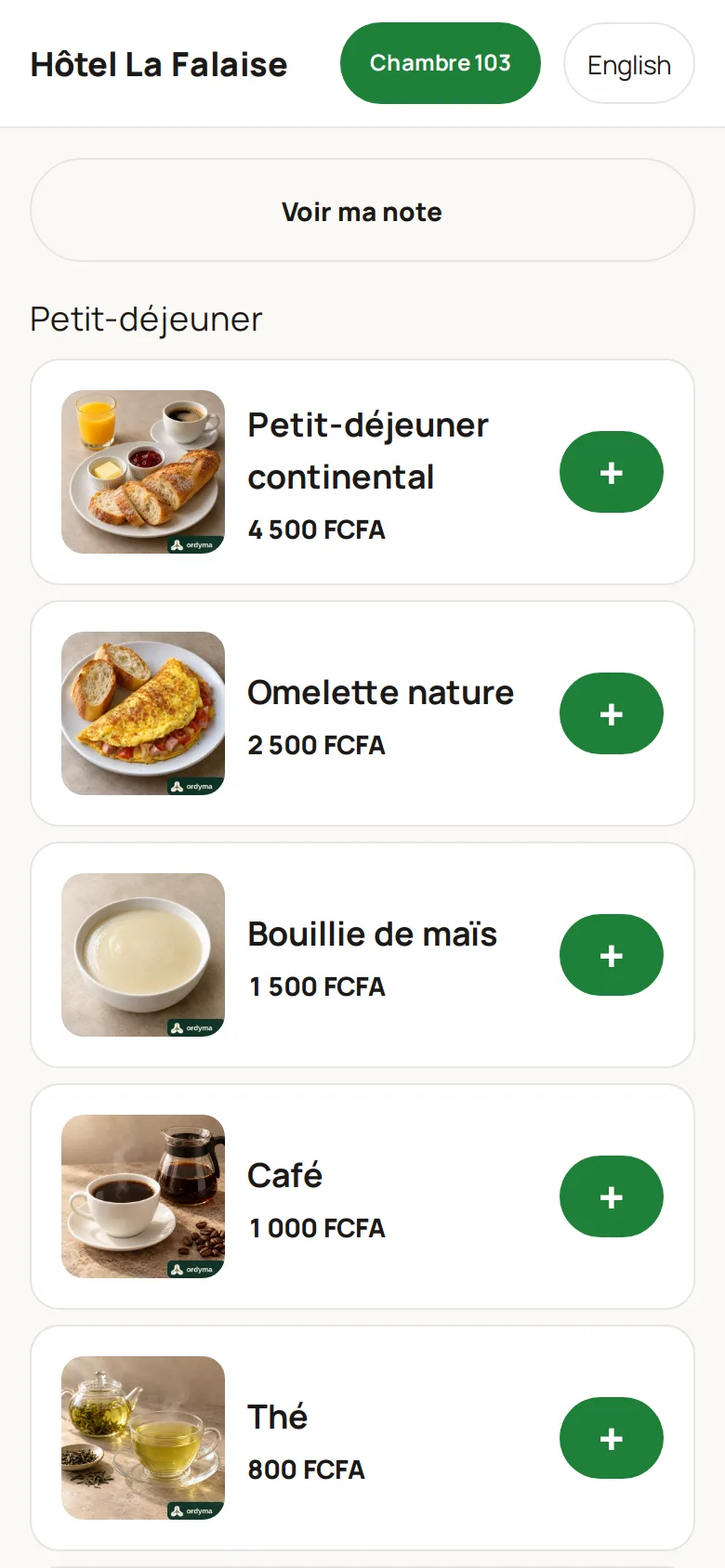
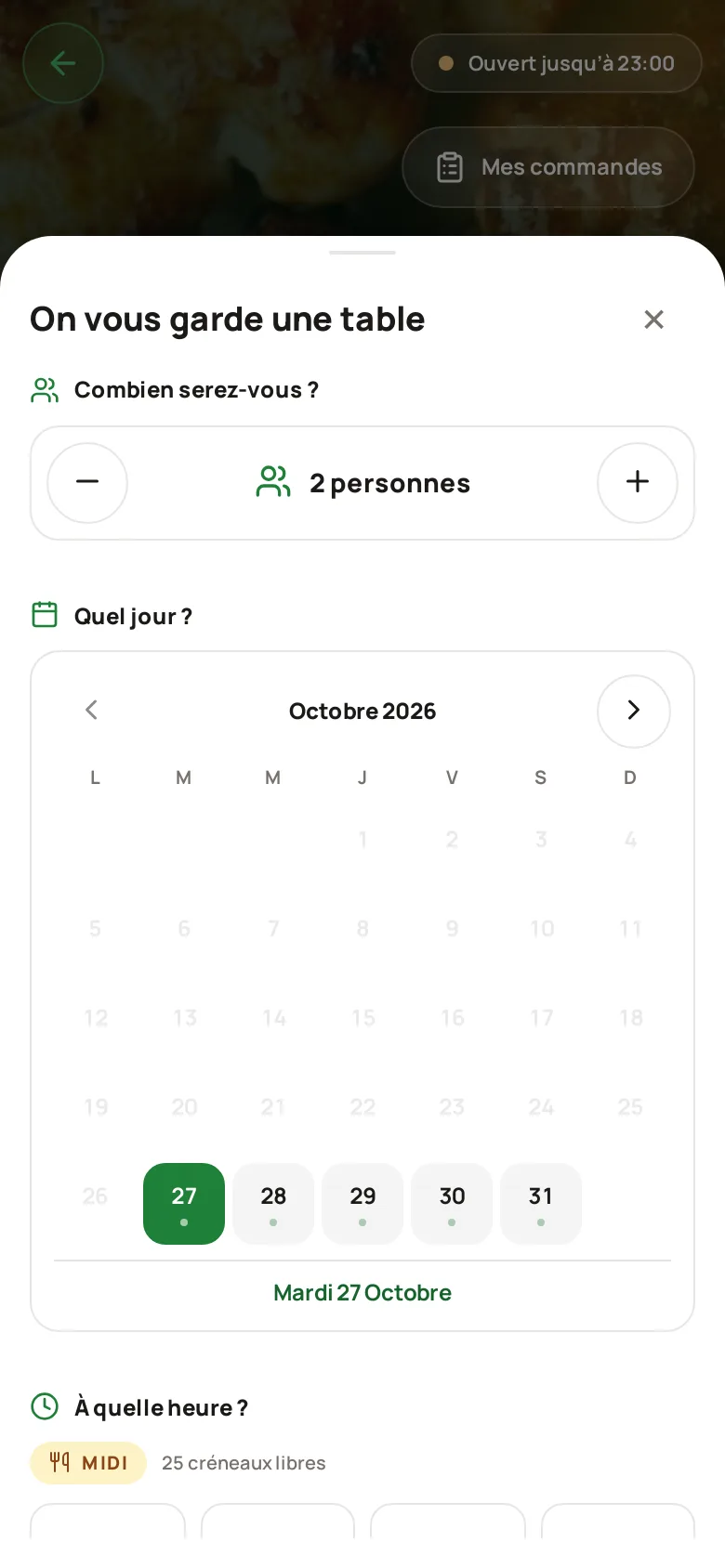
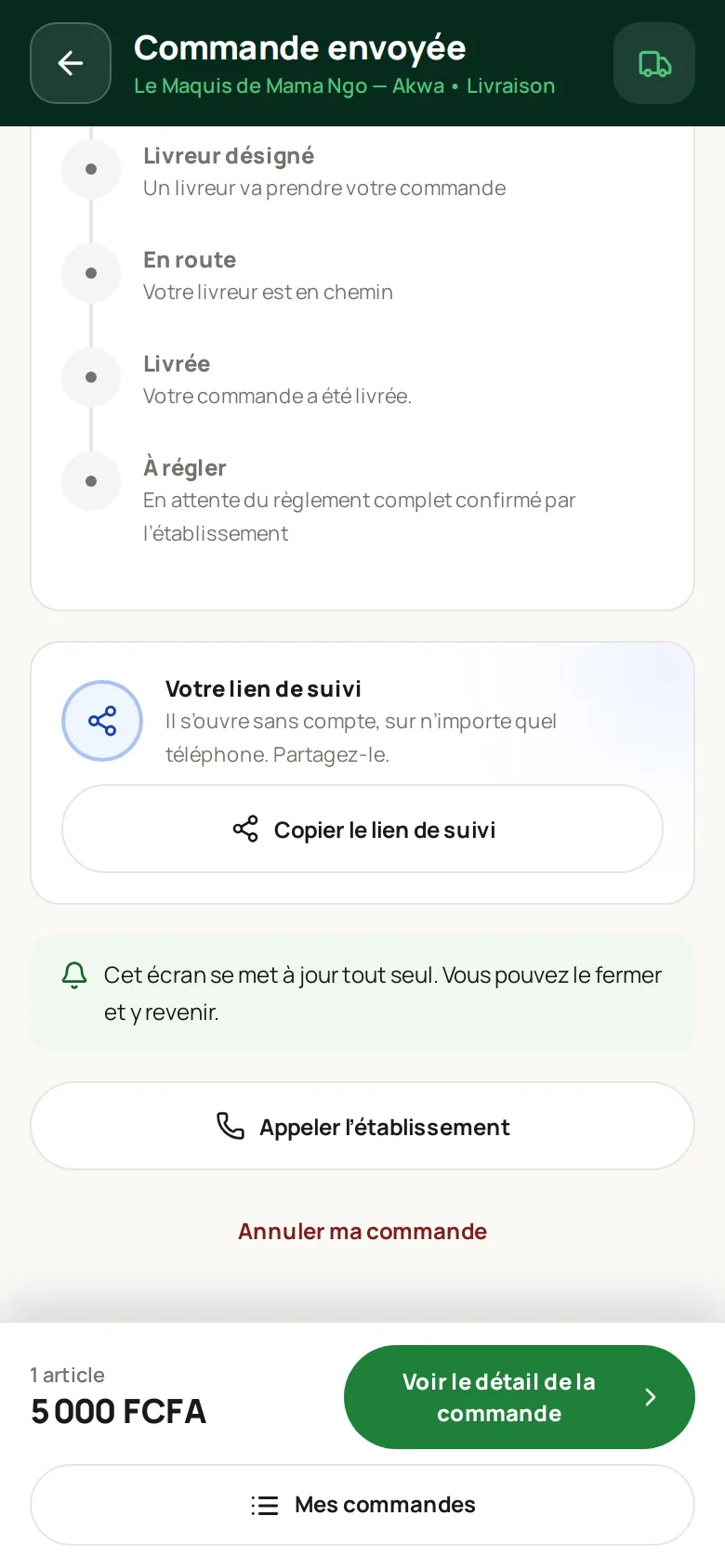
The platform also covers table reservations, remote orders and delivery. A hotel module adds rooms, reservations, stays and housekeeping tasks. Dedicated journeys connect those features with service and reception, with permissions specific to the operations involved.
05
Result
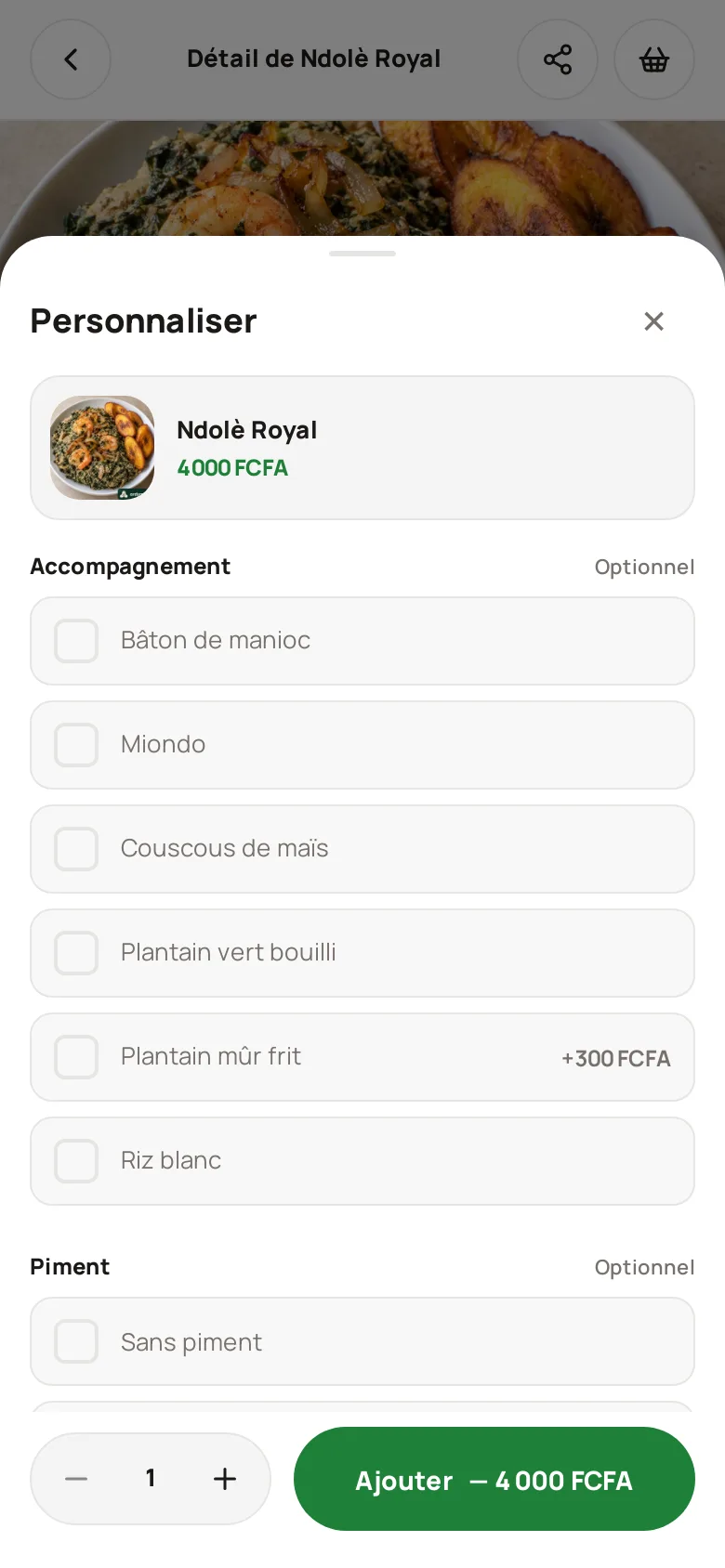
The implemented scope connects table ordering, preparation screens, checkout, reservations, delivery and hotel operations. The portfolio’s demonstration captures show several of these guest and staff journeys. The project is presented at the pilot stage.
06
Stack
- Nuxt
- AdonisJS
- PostgreSQL
- Real-time
- QR codes
07